How to Remove Student Loans From Your Credit Report (And What You Actually Can and Can't Do)

You're scrolling through your credit report, and there it is: that student loan balance staring back at you, dragging down a number you're trying so hard to lift.
Maybe you're prepping to buy a house. Maybe you just want that score to finally crack into "good" territory. Either way, you're wondering the same thing a lot of people do:
Can I just... get this off my report?
Here's the short version: You can't legally remove accurate student loan information from your credit report just because you don't like how it looks. But you can remove errors, and you have real options for improving how those loans affect your score. Let's untangle what's actually possible from what's wishful thinking.
Find the Best Personal Loan for You


We’re sorry, there are currently no available offers
Try adjusting the filters to see more results
First, the hard truth about "removing" accurate debt
Real talk: if a student loan is legitimately yours and the information being reported is accurate, no one can wipe it from your credit report on demand.
Not you. Not a credit repair company charging you $99 a month. Not a magic letter template you found online.
Under the Fair Credit Reporting Act (the federal law that governs what shows up on your report and for how long), accurate negative information can stay on your credit report for up to seven years. Positive accounts — like a loan you've paid faithfully — can actually stay longer, and that's a good thing.
Think of it this way: your credit report is meant to be a factual record, not a highlight reel. Lenders rely on it being honest. So the system is specifically designed to resist "just delete the bad stuff" requests.
Here's what most people miss: a student loan in good standing isn't hurting you. It's often helping you by adding to your credit mix and your length of credit history — two factors that make up a chunk of your FICO score. Removing it (even if you could) might actually drop your score.

When you CAN legitimately remove a student loan entry
Now for the good news. There are real, legal situations where a student loan should come off your report:
Ppart most analyses miss: errors on credit reports are common. A frequently cited Federal Trade Commission study found that roughly one in five consumers had an error on at least one of their credit reports. Student loans, with all their servicer shuffling and status changes, are especially error-prone.
This is the big one. Maybe the loan isn't yours. Maybe it's reporting as delinquent when you were actually in deferment or forbearance. Maybe a single loan got "split" by your servicer and is now showing up twice, double-counting your debt.
Negative items (like a default or late payments) should automatically drop off seven years after the original delinquency. If they're lingering past that, you can dispute them.
Servicer transfers are notorious for this. Your loan gets sold from one company to another, and suddenly your report shows two accounts when there's really one.
How to actually dispute a student loan error
If you've spotted something wrong, here's your game plan.

Step one: Pull all three reports. You're entitled to free credit reports from Equifax, Experian, and TransUnion through AnnualCreditReport.com — the only federally authorized source. An error might appear on one bureau but not another, so check all three.
Step two: Document the discrepancy. Gather proof — payment records, deferment paperwork, anything showing the correct status. Screenshots and statements are your friends here.
Step three: File the dispute. You can dispute directly with each credit bureau (online, by mail, or by phone) and with your loan servicer. The Consumer Financial Protection Bureau recommends disputing with both the bureau and the company that reported the information.
The credit bureau generally has 30 days to investigate and respond. If they can't verify the information, they have to remove or correct it.
This is where the math gets interesting: removing a single erroneous late payment can bump your score meaningfully — sometimes by dozens of points, depending on your overall profile. One wrong "30 days late" mark on an otherwise clean file can punch above its weight.
If your federal student loan went into default, you've got a path that's better than disputing: loan rehabilitation.
When you rehabilitate a defaulted federal loan — typically by making nine on-time, agreed-upon payments over ten months — the default notation gets removed from your credit report. The late payments that led up to it may still show, but losing the default record itself is a real win.
Think of it this way: rehabilitation isn't erasing history so much as it's the government officially saying, "Okay, you're back on track." And that matters to future lenders.
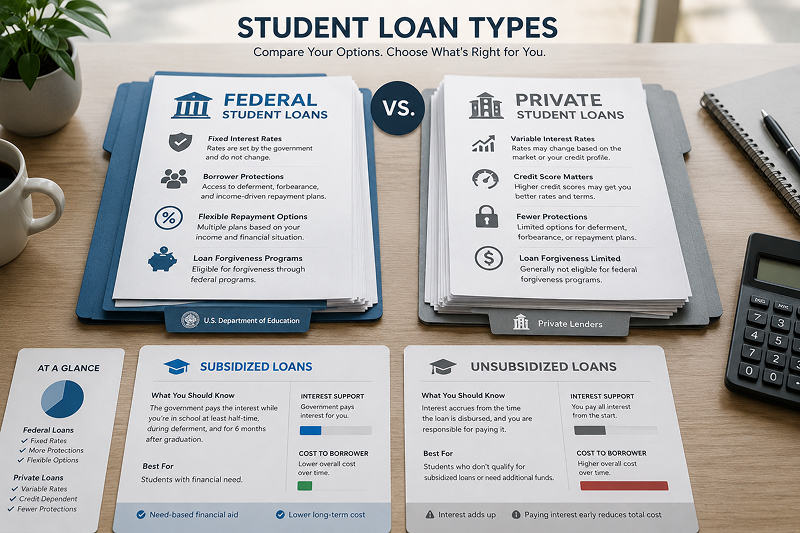
If your loans are private, not federal, your options are narrower — you'd be negotiating directly with the lender, and they're not required to offer rehabilitation. But it's still worth asking about a "pay for delete" arrangement or settlement, and getting any agreement in writing before you pay a dime.
The common mistake to avoid
I've seen this happen over and over: people pay a credit repair company hundreds or even thousands of dollars to "remove" student loans — and the company does nothing the person couldn't have done themselves for free.
Here's why it happens: these companies prey on frustration. They use urgent language and vague promises ("we can challenge anything!"), and they bank on you not knowing your rights.
The truth? They can only dispute the same errors you can dispute yourself, using the same free process. Under the Credit Repair Organizations Act, they legally cannot remove accurate information or promise results they can't deliver. If a company guarantees it can erase legitimate debt, that's your cue to walk away.
Save your money. The dispute process is genuinely free, and you're just as capable of doing it.
A quick reality check on timing
Let's be honest: even when you do everything right, credit repair takes patience.
Disputes take up to 30 days. Rehabilitation takes about ten months. And accurate negative marks fade in impact over time but won't vanish until that seven-year clock runs out.
From a budget perspective, that means if you're planning a big move — like applying for a personal loan or a mortgage — start cleaning up your report months before you apply, not the week of.

Pull your three free credit reports this week and scan every student loan entry against your own records.
Ask yourself three questions:
- Is this account actually mine?
- Is the status (current, deferred, late, defaulted) accurate?
- Is anything showing up twice?
If you spot a genuine error, file a dispute with both the credit bureau and your servicer — and keep copies of everything.
If everything's accurate but ugly, shift your energy from "removing" to "improving": make on-time payments, look into rehabilitation if you've defaulted, and let time do the rest. If you want a deeper dive on rebuilding, our guide on recovering from a bad credit score walks through the next steps.
The good news? A student loan you're handling responsibly isn't your enemy. Managed well, it's quietly building the exact credit history that gets you approved for the things you're working toward.