RAP Explained: How the New Repayment Assistance Plan Really Compares to SAVE

If you're one of the roughly 7 million borrowers who spent the last two years parked in SAVE forbearance, your servicer is about to send you a letter with a 90-day clock attached. And the plan the government wants you to consider — the Repayment Assistance Plan, or RAP — will look, at first glance, like SAVE with a new name. Income-based payments. An interest waiver. Forgiveness at the end.
Here's the part most analyses miss: RAP and SAVE calculate your payment from two fundamentally different starting points. SAVE shielded a large chunk of your income before charging you anything. RAP charges you on the first dollar of adjusted gross income. For a single borrower earning $45,000, that design difference alone moves the monthly payment from roughly $41 to $150 — a 3.7x increase. And yet, when I ran the 30-year math, the RAP borrower came out with something the SAVE borrower never gets: a paid-off loan.
Why this matters right now
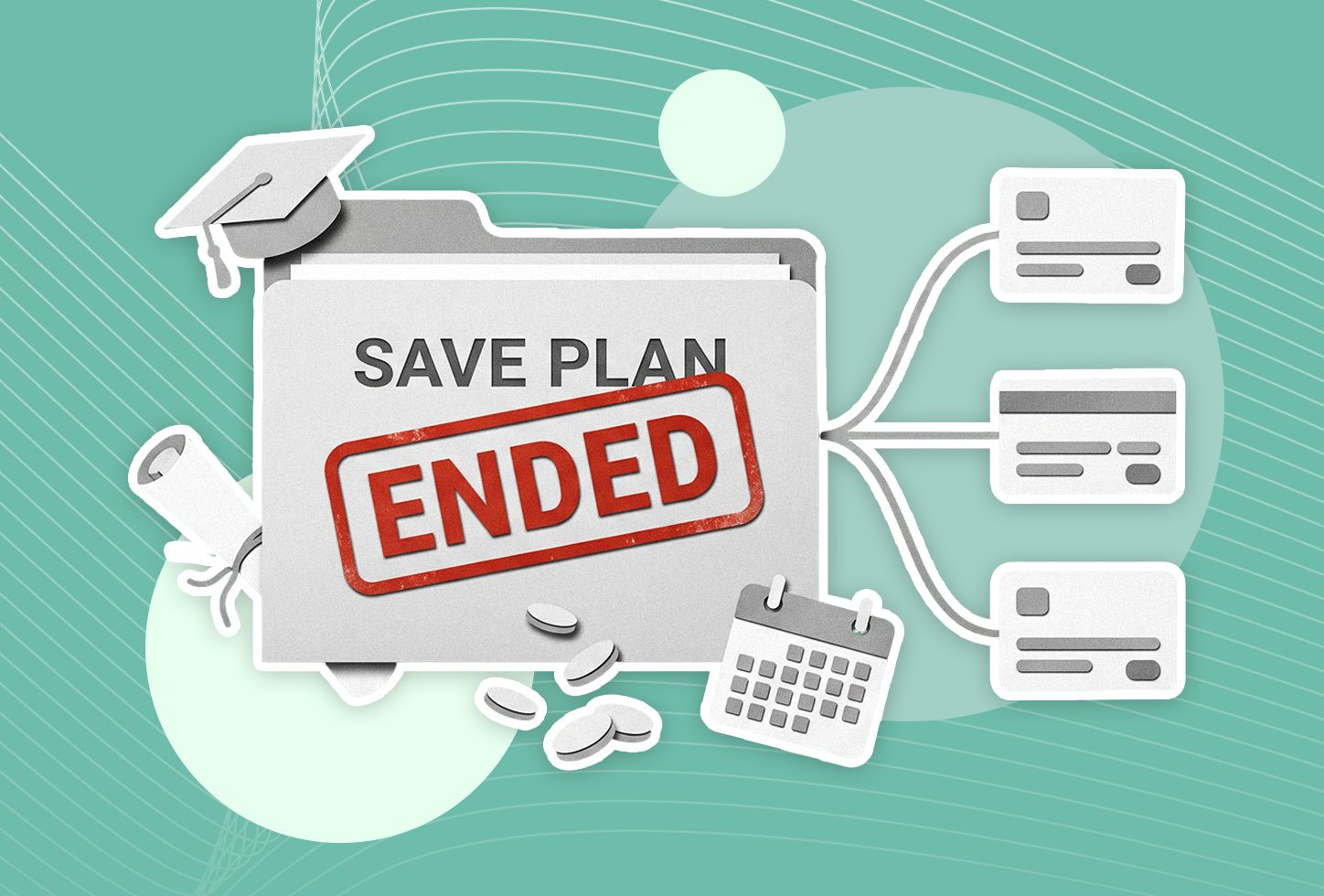
SAVE didn't fade away — it was terminated. After a nationwide injunction froze the plan in mid-2024, a court order effective March 10, 2026 formally ended SAVE, and the Department of Education began the wind-down. Interest on SAVE-forbearance loans has been accruing since August 1, 2025, even with payments paused. Starting July 1, 2026, servicers began sending staggered 90-day notices in tranches expected to run through March 2027, requiring borrowers to pick a new plan; per the Department's court filings, no one is forced off SAVE before September 29, 2026, but ignoring your notice means automatic placement into a Standard plan — often the most expensive monthly option.
RAP, created by the July 2025 budget reconciliation law, opened for enrollment the same day those notices started going out. It is not just SAVE's replacement — it's the endgame for income-driven repayment generally. ICR and PAYE sunset by July 1, 2028, and the Congressional Research Service's summary of the law confirms that anyone who borrows a new federal loan after July 1, 2026 loses access to every legacy IDR plan on their entire balance, old loans included.
Borrowers in legacy income-driven plans owed more than they originally borrowed six years after entering repayment, according to Department of Education portfolio data (June 2026).
Insight #1: The formula change is bigger than the percentage change
SAVE and RAP both tie monthly payments to income. The percentages even overlap — SAVE was designed around 5% (undergraduate) to 10% (graduate) and RAP runs 1% to 10%. Most people stop reading there and assume the plans are comparable. They aren't, because the base each percentage applies to is different.
SAVE used discretionary income. It protected 225% of the federal poverty line before counting a single dollar. For a single borrower in 2025, that shield was about $35,200 of income taxed at 0% for repayment purposes. Earn $35,000? Your payment was $0.
RAP uses total AGI. There is no poverty-line shield. Instead, the percentage itself slides with income — 1% if your AGI is between $10,000 and $20,000, rising one point per $10,000 bracket, capping at 10% above $100,000. Everyone pays at least $10/month, even at near-zero income.
The RAP payment formula:
Bracket rate: 1% at $10,001–$20,000 AGI, increasing by 1 percentage point for each additional $10,000 income bracket, up to 10% above $100,000. Borrowers with AGI at or below $10,000 generally pay the $10 monthly minimum. For married borrowers filing separately, RAP generally uses only the borrower’s own income and eligible dependents.
This is where the formulas begin to diverge. Because RAP applies its percentage to adjusted gross income rather than to income remaining after a poverty-line exclusion, RAP can produce substantially higher monthly payments for low- and moderate-income borrowers. The table below compares RAP with the payment borrowers would have received under SAVE’s intended 5% undergraduate formula. SAVE is no longer available, so the SAVE figures are hypothetical and are included only to illustrate the difference between the two formulas.
| Borrower profile | Hypothetical SAVE payment | RAP monthly payment | Monthly increase under RAP |
|---|---|---|---|
| $30,000 AGI, single | $0/mo | $50/mo | +$50 |
| $30,000 AGI, 1 dependent | $0/mo | $10/mo (minimum) | +$10 |
| $45,000 AGI, single | ~$41/mo | $150/mo | +$109 (≈3.7x) |
| $60,000 AGI, single | ~$103/mo | $250/mo | +$147 (≈2.4x) |
| $60,000 AGI, 2 dependents | ~$0/mo | $150/mo | +$150 |
| $80,000 AGI, single | ~$187/mo | $467/mo | +$280 (≈2.5x) |
| $120,000 AGI, single | ~$353/mo | $1,000/mo | +$647 (≈2.8x) |
Author's calculations using the statutory RAP brackets and SAVE's designed 5% undergraduate formula with 2025 HHS poverty guidelines ($15,650 for a household of one, 48 contiguous states). SAVE figures for graduate-loan borrowers (10% of discretionary income) would be roughly double the SAVE column shown. Figures rounded; individual results depend on family size, filing status, and loan mix. Notice the $60,000-with-two-dependents example. Under SAVE’s intended formula, the poverty-line exclusion for a family of three would have produced a payment close to $0. Under RAP, the two dependent reductions lower the calculated payment by $100, resulting in an estimated $150 monthly payment. RAP’s dependent adjustment is a flat dollar reduction, while SAVE’s family-size protection was built into the poverty-line exclusion. As a result, the difference can be especially significant for borrowers supporting dependents.
Insight #2: RAP adds something SAVE did not guarantee — consistent principal reduction
A fair comparison should consider more than the required monthly payment. It should also examine total payments, interest treatment, principal reduction and the amount that may eventually be forgiven.
RAP includes two separate balance protections:
- Unpaid-interest waiver: if the borrower's full, on-time payment does not cover all interest charged for the month, the remaining interest is waived rather than added to the balance. SAVE also included a similar unpaid-interest protection.
- Matching principal benefit: if the borrower's payment does not reduce principal by at least $50, the government provides an additional principal contribution equal to the borrower's payment, capped at $50 per month. A borrower paying $10 may therefore receive up to an additional $10 toward principal; a borrower paying $50 or more may receive up to $50.
This structure is intended to ensure that borrowers who make full, on-time payments make measurable progress toward reducing principal. However, it does not guarantee that every borrower's principal falls by exactly $50 each month.
Under the author's model, the borrower repays the $35,000 balance under RAP in approximately 18.6 years and makes about $61,500 in total payments. Under SAVE's intended undergraduate formula, the modeled borrower makes substantially lower payments over 20 years and would still require forgiveness of a remaining balance.
Insight #3: The eligibility fine print is where borrowers get trapped
Most people overlook the enrollment mechanics, and this is exactly where irreversible mistakes happen. Three rules deserve your full attention:
- New borrowing after July 1, 2026 is a one-way door. Take out any new federal Direct Loan on or after that date and RAP becomes the only income-driven plan for your entire balance — including older loans that currently qualify for IBR's 20- or 25-year forgiveness. A borrower who was 12 years into an IBR timeline could reset their forgiveness horizon by borrowing one additional semester of loans.
- Parent PLUS loans are excluded — permanently. RAP doesn't accept Parent PLUS loans or consolidation loans containing them. Parents who borrowed before July 1, 2026 had a narrow consolidation window to preserve income-driven access; Parent PLUS loans taken out after that date are eligible only for the fixed-payment Tiered Standard plan.
- RAP payment history doesn't transfer backward. Months spent in RAP count toward RAP's own 30-year clock, and prior IDR history carries into RAP — but time in RAP does not count toward IBR forgiveness if you later switch back. The "park in RAP, then hop to IBR for faster forgiveness" strategy was closed off in the final rules, as Student Loan Planner's analysis of the regulations details. Treat a move to RAP as a long-term commitment.
RAP vs. SAVE: the trade-offs in plain terms
Where RAP wins
- Balance is guaranteed to fall at least $50/month — no more watching debt grow despite on-time payments
- Unpaid interest is waived monthly, like SAVE
- Counts toward PSLF (confirmed by final rule, April 2026)
- Moderate-debt borrowers often pay off years early — no reliance on a forgiveness promise surviving 20+ years of politics
- It actually exists; SAVE is legally dead
Where SAVE was stronger
- Payments were typically 2–4x lower at the same income, thanks to the 225% poverty-line shield
- $0 payments for low earners; RAP's floor is $10/month for everyone
- Forgiveness at 20–25 years vs. RAP's 30
- Family-size protection scaled with the poverty line; RAP's flat $50/dependent credit helps far less at larger family sizes
- High-balance graduate borrowers fare notably worse under RAP's longer clock
What to do, depending on where you stand
Situation
You're among the ~7 million exiting SAVE forbearance between now and mid-2027. Interest has been accruing on your balance since August 2025.
Best move
Run your numbers under both IBR and RAP before your individual deadline. IBR (10–15% of discretionary income, 20–25-year forgiveness) frequently beats RAP for lower earners and anyone deep into a legacy forgiveness timeline; RAP tends to win for borrowers around $80,000 AGI or below with moderate balances who value the interest waiver and principal guarantee.
Why
The formulas cross over at different points depending on family size and debt load — there is no universal answer. The one universally bad outcome is doing nothing and defaulting into the Standard plan with a payment sized to your balance rather than your income.
Situation
You (or your student) will take out federal loans for the 2026–27 academic year or later. RAP and the Tiered Standard plan are your only repayment options — and any new loan pulls your older loans under the new rules too.
Best move
Price the full repayment cost before borrowing, not after. Compare RAP's income-based track against the Tiered Standard plan's fixed terms (10–25 years based on balance), and weigh whether a smaller federal loan plus other funding beats a larger balance under a 30-year income-driven clock. Our guide to how federal and private student loans differ when payments go wrong covers the protection gap worth understanding before you consider any private borrowing.
Why
Post-2026 borrowers can't fall back on legacy IDR plans, so the borrow-now-optimize-later approach that worked for a decade no longer applies. The optimization has to happen at origination.
Situation
You're working toward Public Service Loan Forgiveness and need 120 qualifying payments on a qualifying plan.
Best move
Your decision simplifies to one question: which qualifying plan — IBR or RAP — gives you the lowest monthly payment? PSLF's 10-year clock doesn't care about RAP's 30-year horizon, and PSLF forgiveness remains tax-free either way. A Department of Education final rule issued in late April 2026 confirmed on-time RAP payments count toward the 120.
Why
On PSLF, every dollar above the minimum qualifying payment is a dollar donated. Minimize the payment, keep employer certifications current, and note that SAVE forbearance months generally don't count toward the 120 without going through the backlogged PSLF buyback process.
The mistake to avoid: judging RAP by the monthly payment alone
Let's be honest: most borrowers will open the loan simulator, see that RAP's payment is double or triple what SAVE charged, and conclude the new plan is strictly worse. That framing misses the actual decision. SAVE's low payments were, for millions of borrowers, an interest-only-or-less treadmill that depended on forgiveness arriving intact after two decades — and if the last two years proved anything, it's that repayment plans can be litigated out of existence mid-stream. RAP's higher payments come bundled with a structural guarantee that your balance falls every month. For some borrowers the SAVE-style bet was still mathematically superior; for others, RAP's pay-it-down design ends up cheaper in total and finishes years sooner. You can't know which camp you're in without running your specific numbers — our free loan calculator is a reasonable place to pressure-test payment scenarios, and the federal Loan Simulator at StudentAid.gov models the plans directly.
Depends on your situation: the edge cases
You pay a flat $10/month — RAP's minimum. Under SAVE you would have paid $0. It's a small dollar amount, but it changes the psychology and the mechanics: missing those $10 payments starts delinquency the same as missing $500 ones, and only on-time payments earn the interest waiver, the $50 principal subsidy, and forgiveness credit.
Filing separately means RAP counts only your income and your dependents — the same lever borrowers used under legacy plans. It's most valuable when one spouse carries most of the student debt and the other earns most of the income. The trade-off is losing joint-filing tax benefits, so the comparison belongs in your tax planning, ideally with a professional if the amounts are material.
You're in the group most disadvantaged by RAP. High debt-to-income borrowers were the likeliest to reach forgiveness under legacy plans at year 20 or 25; RAP pushes that to year 30, potentially adding five to ten years of payments. If you still qualify for IBR and haven't borrowed since July 1, 2026, compare total projected costs carefully before switching — and remember the move into RAP is effectively one-way.
Under current law, yes — balances forgiven through RAP's 30-year track are treated as taxable income in the year of discharge. PSLF forgiveness remains tax-free. A borrower expecting a large year-30 discharge should plan for a significant one-time tax bill, though thirty years is a long time and tax treatment of forgiveness has changed before.
Administrative forbearance itself is reported as current, not delinquent — but the transition period is where credit damage happens, typically from missed payments after a plan switch takes effect. If your report already shows student loan issues, our guide to what you actually can and can't change about student loans on your credit report separates the realistic fixes from the myths.
Your one action step this week
Log in to StudentAid.gov and your servicer's portal and confirm your contact information is current — then run the Loan Simulator with your actual AGI, family size, and balance to compare RAP against IBR (and the Standard plans) before your 90-day notice arrives. Decision rules that hold up across most scenarios: if your AGI is roughly $80,000 or below with a moderate balance, RAP deserves serious consideration; if you're years into a legacy forgiveness timeline or carrying a high graduate balance, price IBR first; if you're on PSLF, simply pick whichever qualifying plan is cheaper monthly. If you're also weighing options against your broader borrowing picture, you can compare student loan offers from multiple lenders — but exhaust federal repayment analysis before considering any move that gives up federal protections.
The bottom line
RAP charges more per month than SAVE would have, but it guarantees your balance falls every month you pay on time — turning income-driven repayment from a forgiveness bet into an actual payoff path for many borrowers. Whether that trade works in your favor comes down to your income bracket, family size, debt load, and forgiveness timeline, so run your specific numbers before your 90-day window forces the choice for you.
Bankguider is an independent comparison and information service; we may earn a commission when you click or apply through links on our site. We are not a lender or broker. This article is for informational purposes only and is not financial, legal, or tax advice. Repayment plan eligibility, payment amounts, and forgiveness treatment depend on your individual circumstances — verify current terms at StudentAid.gov and consider consulting a qualified advisor before making repayment decisions.
FAQ
July 1, 2026. Enrollment runs through StudentAid.gov; the Department of Education says the application takes about 10 minutes, and consenting to IRS data sharing (required for RAP) speeds up income verification.
No. SAVE was terminated by court settlement in March 2026. Once your 90-day notice period ends, failing to choose a plan means automatic placement into the Standard or Tiered Standard plan, with payments based on your balance rather than your income.
No. IBR remains available to borrowers who took out all their loans before July 1, 2026, uses discretionary income (10–15% above 150% of the poverty line), and forgives at 20–25 years. RAP uses total AGI at 1–10%, forgives at 30 years, and adds the interest waiver plus the $50 principal guarantee that IBR lacks.
Qualifying payments made under prior IDR plans carry into RAP's 30-year count. The reverse is not true — months spent in RAP don't count toward IBR forgiveness if you later switch, which is why the move deserves a long-term view.
RAP is written into statute, which makes it more durable than SAVE (a regulatory creation, which is partly why courts could unwind it). Statutes can still be amended by future Congresses, but any near-term repayment strategy should be built on RAP's rules as they exist today, not on hoped-for revisions.